Drainage is one of the most critical yet often overlooked aspects of new build homes. Get it wrong, and you will face flooding, subsidence, failed building inspections, and expensive remedial work.
As experienced drainage contractors serving Hampshire, West Sussex, and Wiltshire for nearly 20 years, Dorrington Groundworks provides this comprehensive guide to drainage installation for new build homes.
Types of Drainage Systems
Foul Water Drainage
Foul water drainage carries wastewater from toilets, sinks, baths, showers, and appliances. This system must connect to either mains sewer, private treatment plant, or septic tank.
Surface Water Drainage
Surface water drainage manages rainwater from roofs, driveways, and paved areas. Many Hampshire developments now require stormwater attenuation systems that temporarily store surface water and release it at controlled rates.
Building Regulations and Drainage
Building Regulations Part H sets standards for drainage systems. If connecting to public sewers, you will need approval from the local water company (Southern Water covers much of Hampshire). Drainage installation requires multiple building control inspections.
The Drainage Installation Process
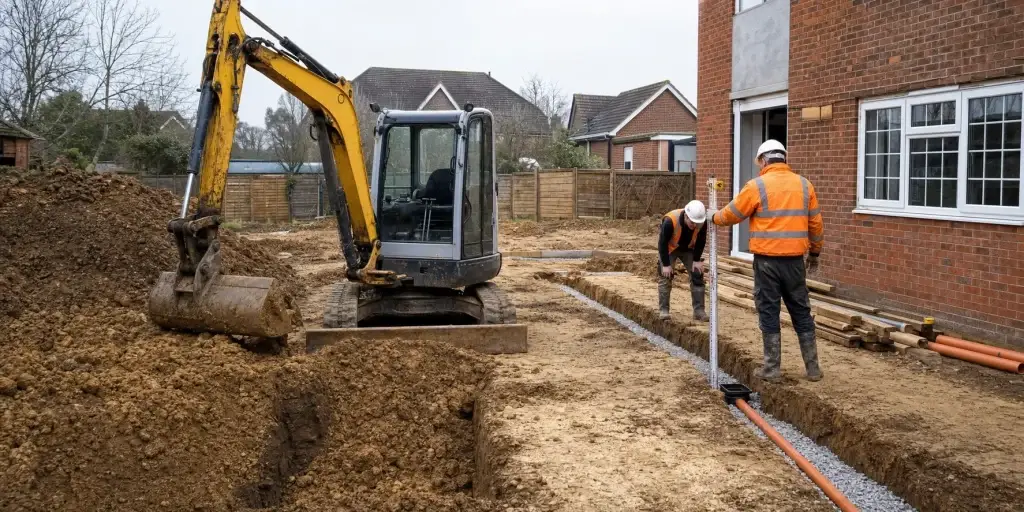
The process includes design and planning, setting out, excavation, bedding and pipe installation, inspection chambers and manholes, testing, backfilling and reinstatement, and final connection.
Common Drainage Issues and How to Avoid Them
In Hampshire clay soils, ground movement can damage rigid pipes. Professional installation ensures correct gradients, proper bedding, and adequate access points throughout.
Our SMAS accreditation and CSCS certification demonstrate our commitment to professional standards. With nearly 20 years experience, Joe, Nick, and Roger Dorrington have the knowledge to handle drainage projects of any complexity.
If you are planning a new build in Hampshire, contact us for expert advice and a free quote. For more information, explore our drainage services and foundation services.