Setting Realistic Expectations
One of the first questions any homeowner or builder asks when planning a construction project is: how long will the groundworks take? It’s a fair question — groundworks are the critical first phase, and nothing else can start until they’re complete. Delays at this stage push back the entire programme.
The honest answer is that timelines vary significantly depending on the type of project, ground conditions, weather, and a dozen other factors. But with nearly 20 years of groundworks experience across Hampshire, we can give you realistic timeframes based on what we see on site every day.
Here’s a practical guide to help you plan your project with confidence.
Typical Timelines by Project Type
Extension Foundations: 1–2 Weeks
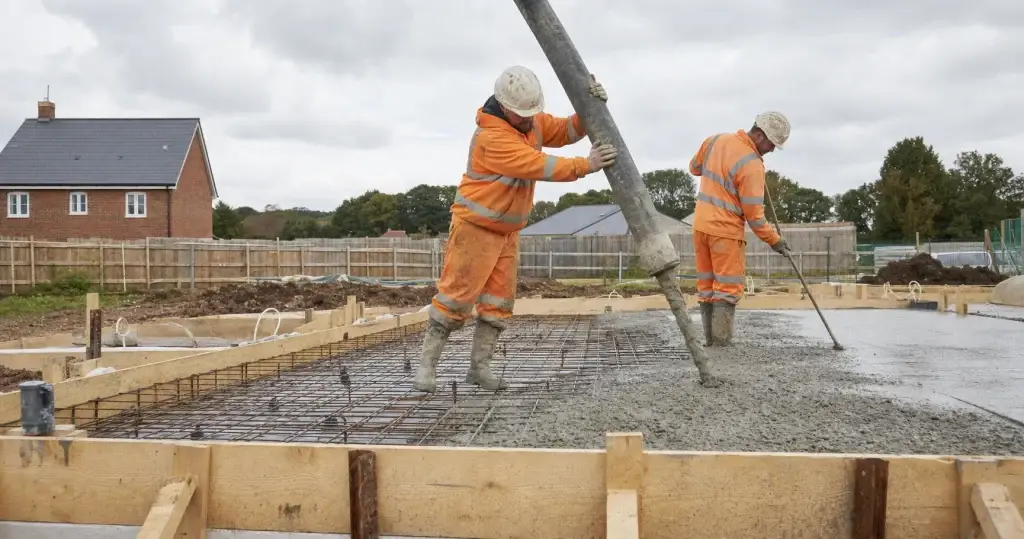
A standard single-storey or two-storey rear extension is one of the most common projects we deliver. The groundworks phase typically includes excavating foundation trenches, pouring concrete, installing below-ground drainage, and preparing the oversite (the ground beneath the floor slab).
For a straightforward extension on reasonable ground, expect 5 to 10 working days. This breaks down roughly as:
- Setting out and excavation: 1–2 days
- Building Control inspection and concrete pour: 1 day
- Substructure brickwork (if strip foundations): 2–3 days
- Below-ground drainage: 1–2 days
- Backfill and oversite preparation: 1–2 days
On clay soil — common across Southampton, Eastleigh, and Fareham — deeper foundations mean more excavation and more concrete, which can push this towards the two-week mark.
New Build Foundations: 2–4 Weeks
A new build house involves substantially more foundation work than an extension. The full footprint needs excavating, there’s more drainage to install, and the oversite area is larger. For a typical three or four-bedroom house:
- Site set-up and setting out: 1–2 days
- Foundation excavation: 2–4 days
- Building Control inspections and concrete pour: 1–2 days
- Substructure (if applicable): 3–5 days
- Below-ground drainage: 3–5 days
- Service connections and ducting: 1–2 days
- Backfill, compaction, and oversite: 2–3 days
Total: 2 to 4 weeks, depending on complexity and ground conditions.
Drainage Installation: 1–3 Weeks
Standalone drainage projects — whether it’s a new foul drainage run, surface water system, or a complete drainage scheme for a new build — vary widely in scope. A simple drainage connection for an extension might take 2–3 days. A full drainage scheme for a new build with soakaways, inspection chambers, and connections to the public sewer could take 2–3 weeks.
Drainage work on clay soil often takes longer because the ground is harder to excavate when dry and waterlogged when wet — there’s rarely a convenient middle ground.
Site Clearance: 1–5 Days
Site clearance is usually the fastest phase of groundworks. Removing vegetation, grubbing out roots, stripping topsoil, and clearing debris from a typical residential site takes 1 to 5 days depending on the size and condition of the site.
A small, relatively clean site for an extension might be cleared in a day. A larger plot overgrown with trees, shrubs, and accumulated waste could take a full week, particularly if there are trees requiring sectional felling or protected species surveys.
Full Groundworks Package (New Build): 4–8 Weeks
For a complete groundworks package on a new build — from initial site clearance through to a slab-ready site — budget for 4 to 8 weeks. This encompasses:
- Site clearance and topsoil strip: 1 week
- Earthworks and levels (if needed): 1–2 weeks
- Foundations: 2–4 weeks
- Drainage: 1–3 weeks (overlapping with foundations)
- Service connections: 1 week (often overlapping)
- Oversite and slab preparation: 1 week
Many of these phases overlap — drainage is often installed alongside foundation work, for example — so the total programme is shorter than the sum of individual tasks.
Factors That Affect Your Timeline
Weather
Weather is the single biggest variable in groundworks programming. Rain makes clay sites virtually unworkable — excavations fill with water, machinery gets bogged down, and concrete pours may need to be postponed. Extended wet periods can add days or even weeks to a programme.
Frost is less of a problem but can prevent concrete pours (concrete must not be poured when temperatures are below 2°C or falling). Snow and ice obviously shut sites down entirely.
In Hampshire, the driest and most productive months for groundworks are typically May through September. Projects starting in late autumn or winter should build in additional contingency for weather delays.
Ground Conditions
As we’ve discussed in our guide to groundworks costs in Hampshire, the ground beneath your site has a major impact on how long the work takes. Clay soil requires deeper excavations. Rock or heavy gravel may need breakers. High water tables mean pumping. Contaminated ground may need specialist removal.
The difference between a site with good ground and one with challenging conditions can easily double the foundation programme.
Access
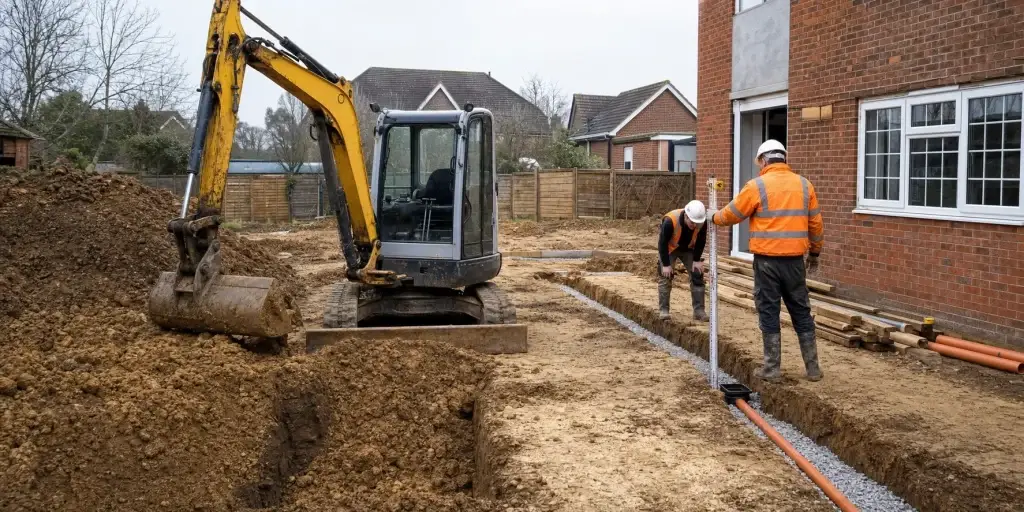
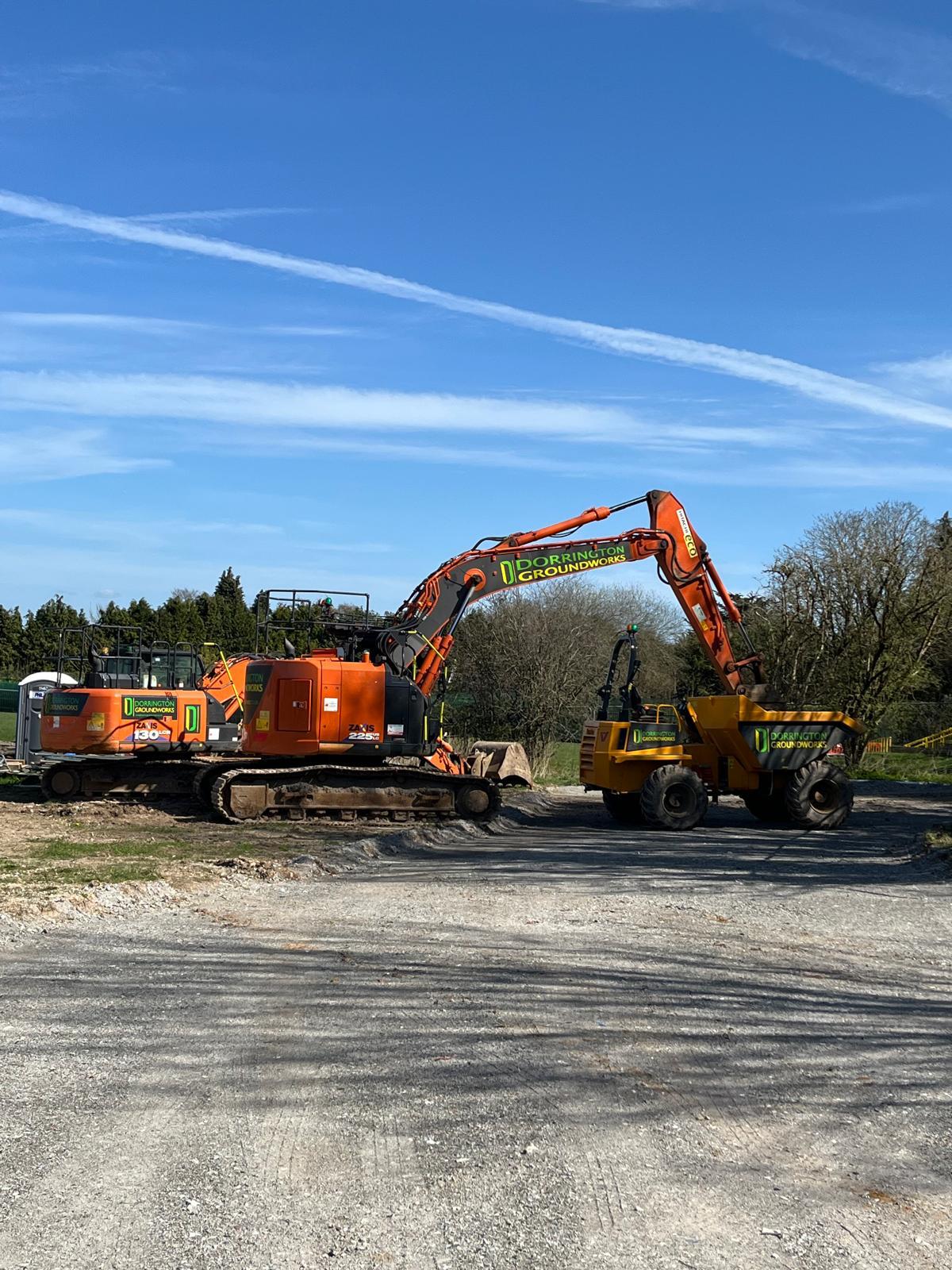
Groundworks require machinery — typically a tracked excavator, and often a dumper truck for moving spoil. If site access is restricted (narrow driveways, limited road frontage, rear-only access), work takes longer because smaller machines must be used and materials have to be moved further.
We always assess access during our initial site visit and plan machinery and logistics accordingly. Where access is tight, we factor additional time into the programme.
Building Control Inspections
Building Control must inspect foundation trenches before concrete is poured and drainage before it’s backfilled. If the inspector isn’t available on the day you’re ready, you wait — and that can mean a day’s delay each time.
We mitigate this by building good relationships with local Building Control teams and giving advance notice of inspection requirements. In most cases we get same-day or next-day inspections, but it’s always a factor in programming.
Utility Connections
If your project requires new connections to water, gas, electricity, or telecoms, these are arranged through the utility companies — and their timescales are often the longest lead item in a groundworks programme. Water connections through Southern Water can take 6 to 12 weeks from application to installation. Electricity connections through SSEN can be similar.
Start these applications as early as possible — ideally before groundworks begin.
What Happens During Each Phase
Understanding the sequence helps you see why things take the time they do:
- Site set-up: Fencing, welfare facilities, material storage areas, and machine delivery
- Setting out: The building’s footprint is marked on the ground using the architect’s drawings, usually with profile boards and string lines
- Site clearance: Vegetation, topsoil, and obstructions are removed
- Excavation: Foundation trenches are dug to the required depth and width
- Inspection: Building Control inspects the trenches
- Concrete pour: Foundations are filled with concrete, delivered by mixer trucks
- Substructure: Masonry walls built up from the foundation to ground level (if strip foundations)
- Drainage: Below-ground pipes, inspection chambers, and connections installed
- Backfill: Trenches and the building footprint are backfilled and compacted
- Oversite: Ground is prepared for the floor slab — often involving a layer of hardcore, sand blinding, and a damp-proof membrane
How to Avoid Delays
Based on our experience, here are the most effective ways to keep your groundworks programme on track:
- Commission a ground survey early: Understanding what’s below the surface before you start avoids surprises that cause delays. Even trial holes can provide valuable information.
- Engage Building Control before starting: Submit your Building Regulations application well in advance and establish contact with your allocated inspector.
- Ensure good site access: If access improvements are needed (temporary road, gate widening, hedge removal), do these before the groundworks team arrives.
- Apply for utility connections early: These have the longest lead times and can hold up the entire project if left too late.
- Choose the right time of year: Starting groundworks in spring or early summer gives you the best chance of dry weather and productive working conditions.
- Use experienced groundworkers: A team that knows the local ground conditions, has established Building Control relationships, and runs an efficient site operation will simply be faster.
Winter Working Considerations
We work through winter in Hampshire — most groundworks contractors do — but it’s important to understand the implications. Shorter daylight hours reduce the productive working day. Rain is more frequent and can shut sites down for days at a time. Clay sites become particularly challenging, as the ground becomes saturated and unstable.
If your programme requires winter groundworks, build in a 25% to 50% time contingency beyond the summer estimates above. It’s better to plan for delays and finish early than to promise a tight programme and overrun.
Get a Realistic Programme for Your Project
Every project is different, and the timelines above are guides based on typical conditions. The best way to get an accurate programme for your specific project is to have an experienced groundworker assess your site.
At Dorrington Groundworks, we’re SMAS accredited and CSCS certified, with nearly two decades of experience across Hampshire. When we quote a project, we provide a realistic programme based on what we know about the site, the ground conditions, and the scope of work — not optimistic guesswork.
Call us on 01489 539197 for a free site visit and quote, or get in touch through our contact page. Whether you’re planning an extension in Southampton, a new build near Winchester, or driveway works in Fareham, we’ll give you an honest timeline and deliver on it.