If you are planning a new driveway in Hampshire, the surface finish is only part of the job. The driveway also needs to deal with rainwater properly, avoid sending runoff onto the road, and fit around any dropped kerb or vehicle access permissions that apply.
This is where many projects get more complicated than expected. A driveway can look simple on the drawing, but the drainage, falls, sub-base, soil conditions and highway access all need to work together. If they are not checked early, you can end up with standing water, loose gravel on the road, a refused dropped kerb application, or a surface that needs changing before it is accepted.
At Dorrington Groundworks, we regularly help homeowners and builders across Southampton, Eastleigh, Fareham, Winchester, Portsmouth and the wider Hampshire area with driveways and external works, drainage installation, excavation and site preparation. Here is a practical guide to the rules and checks that matter before work starts.
The Short Answer
For many houses in England, a new or replacement front driveway will not need planning permission if it uses a permeable or porous surface, or if rainwater is directed to a lawn, border, soakaway or another suitable permeable area within the property.
If the surface is more than 5 square metres and uses traditional impermeable materials without a proper way for the water to drain within the property, planning permission is normally needed.
That rule is about the driveway surface. A dropped kerb is a separate issue. If a vehicle needs to cross a public pavement, verge or highway land to reach the driveway, you normally need permission from the highway authority before that crossing is installed or widened.
Planning Permission and the 5 Square Metre Rule
The key national rule for front garden paving is set out in government guidance on permeable surfacing. It was introduced to reduce the flood risk created when front gardens are replaced with impermeable hardstanding.
The principle is straightforward:
- permeable or porous driveway surfaces can allow rainwater to drain through the construction;
- impermeable surfaces can still be acceptable where the water is directed to a suitable permeable area within the property;
- traditional impermeable driveways over 5 square metres normally need planning permission if they do not control runoff in that way.
The Planning Portal gives the same practical guidance for paving front gardens: permeable surfacing, such as gravel, permeable concrete block paving or porous asphalt, can avoid the need for planning permission, as can directing rainwater to a lawn or border to drain naturally.
There are important limits. These rules are aimed at houses, not every property type. Flats, maisonettes, listed buildings, conservation areas, Article 4 areas and properties with removed permitted development rights may need additional checks. If the property is unusual, protected, subdivided or in a sensitive location, check with the local planning authority before committing to the specification.
Permeable Surface Does Not Mean Poor Construction
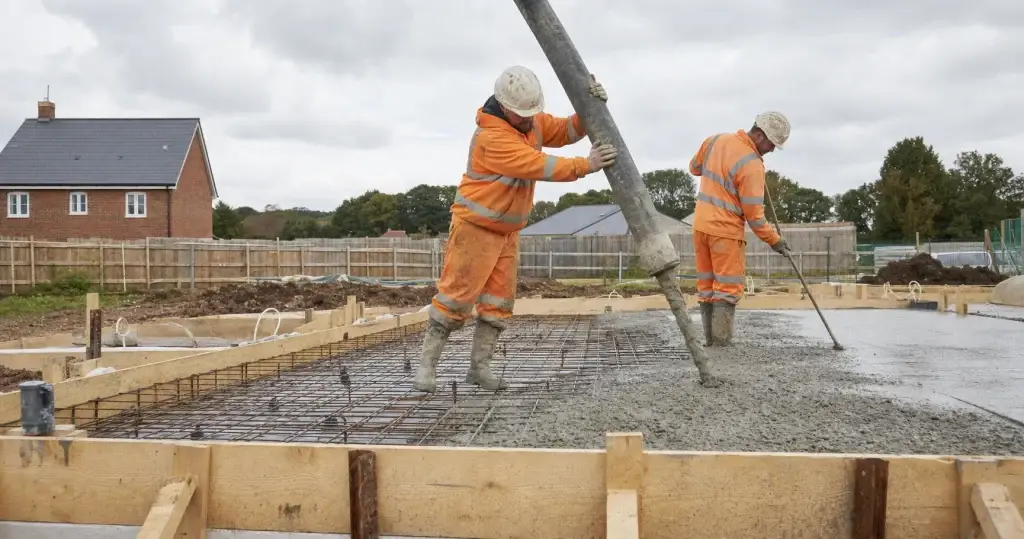
A permeable driveway still needs proper groundworks. The surface material is only one part of the system.
For example, gravel may be porous, but if it is laid over compacted, impermeable material with no edge control or no allowance for water movement, it may not perform as intended. Permeable block paving also depends on the correct build-up beneath it, including open-graded stone that can store and move water. Resin systems need similar care: resin-bound surfacing may be permeable when installed on a suitable permeable base, while resin-bonded surfacing is generally a different system and should not be treated as automatically permeable.
In practical terms, the design needs to answer three questions:
- Where will the rainwater go?
- Can the ground or drainage system accept it?
- Will the driveway still have the strength and stability needed for vehicles?
If the answer to any of those is unclear, the driveway needs more design work before excavation starts.
Why Driveway Drainage Matters
Driveway drainage is not just a planning issue. It affects the condition of the driveway, the house, neighbouring land and the public highway.
Poor drainage can cause:
- standing water near the entrance or garage;
- surface water running onto pavements or roads;
- water tracking towards the house instead of away from it;
- washout of loose surface materials;
- weakening of the sub-base over time;
- ice risk during cold weather;
- disputes with neighbours or the highway authority.
Approved Document H, the Building Regulations drainage guidance for England, sets out the surface water hierarchy. In plain English, surface water should discharge to a soakaway or other infiltration system where practicable. If that is not reasonably practicable, the next option is a watercourse. If that is not reasonably practicable, discharge to a sewer may be considered.
That hierarchy is one reason driveway drainage should not be improvised on site. A channel drain at the front of the drive is only useful if it has a lawful and suitable outlet. Collecting water and then sending it to the wrong place does not solve the problem.
Soakaways in Hampshire: Useful, but Not Automatic
Soakaways are often a good solution for driveway runoff, but they are not suitable for every site.
Some Hampshire sites have ground conditions that allow infiltration to work well. Others, particularly where clay or slow-draining soils are present, need closer investigation. A soakaway that is undersized, too close to buildings, too close to boundaries, or installed in ground that will not drain properly can fail quickly.
Before relying on a soakaway, it is sensible to check:
- the size of the driveway area being drained;
- the falls and levels across the frontage;
- soil type and infiltration rate;
- distance from the house, neighbouring structures and boundaries;
- whether there are existing drains, services or tree roots nearby;
- whether the site has a history of standing water or flooding.
If you are already concerned about ground conditions, our guide to building on clay soil in Hampshire explains why soil behaviour matters for both foundations and external works.
Dropped Kerbs Are a Separate Permission
A driveway inside your boundary does not automatically give you permission to drive across the public pavement or verge. If the vehicle route crosses highway land, the crossing normally needs approval from the highway authority.
In most of Hampshire, Hampshire County Council deals with applications for a vehicle crossing, usually called a dropped kerb. Their guidance says the property owner should apply, and that approval is required to create or extend a vehicular access. It also explains that if access is taken from a classified A, B or C road, planning permission is needed before the highway application can be processed.
There are also technical checks. Hampshire County Council notes that planning permission does not override the crossing approval requirements, so a project can still be refused if it does not meet highway criteria.
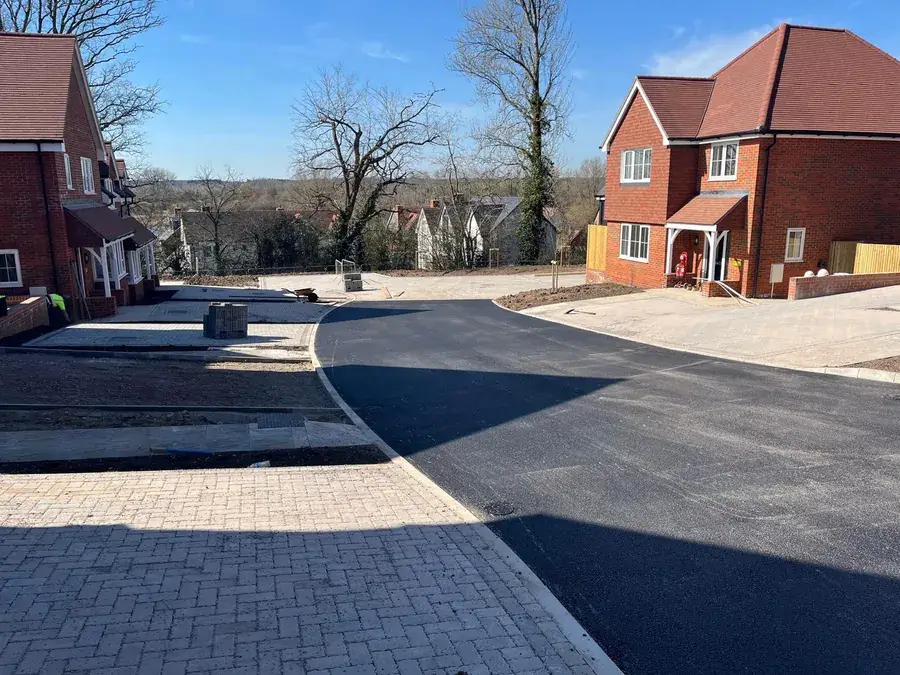
Southampton and Portsmouth have their own highway processes. Southampton City Council’s dropped kerb guidance says driveways and parking areas should be constructed to prevent water running onto the highway, and that a new driveway must have proper drainage so water does not spill onto public pavements or roads. Portsmouth City Council processes dropped kerb applications through its highway contractor, Colas, and says a private contractor can carry out the work only if Colas approves works to the public highway.
The practical point is simple: check the dropped kerb route before building the driveway. If the crossing cannot be approved, or if the authority requires a different position or width, the driveway layout may need to change.
What We Check Before Driveway Groundworks Start
A good driveway specification starts with site checks, not just a choice of surface material.
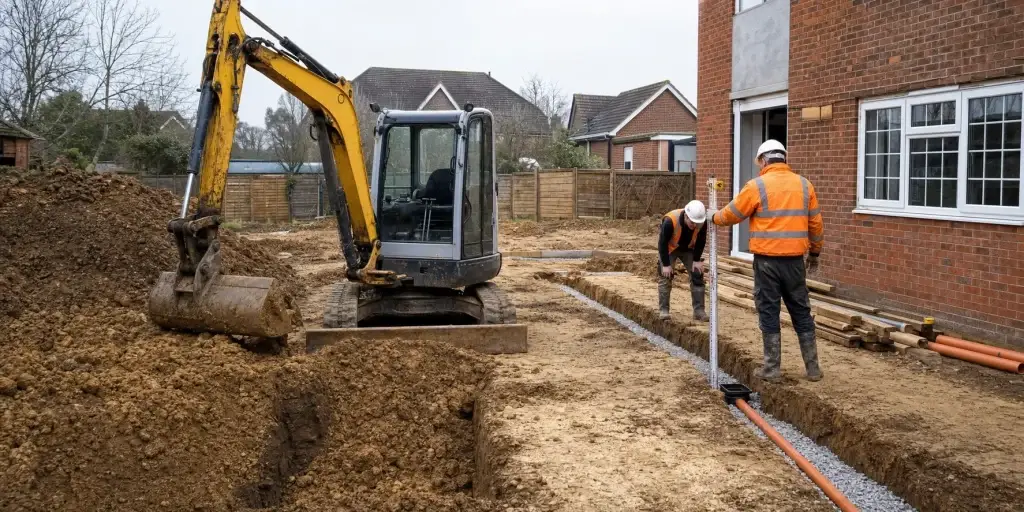
Before excavation and construction, the important checks include:
- existing levels from the house to the highway;
- whether water currently falls towards or away from the building;
- where the proposed driveway runoff will go;
- whether permeable construction is suitable for the site;
- whether a soakaway, rain garden, border or other drainage outlet is practical;
- the position of existing drains, inspection chambers and utility services;
- the condition of the existing sub-base or made ground;
- access for excavation equipment and spoil removal;
- whether a dropped kerb or highway licence is needed;
- whether local planning restrictions may affect the work.
Those checks are also useful for pricing. A simple gravel driveway on free-draining ground is a different job from an impermeable paved driveway that needs excavation, kerb coordination, channel drainage and a designed soakaway. Our guide to groundworks costs in Hampshire explains why site conditions and drainage details can change the final cost of a project.
Common Mistakes That Cause Driveway Problems
Assuming planning permission and dropped kerb approval are the same thing
They are separate. Planning deals with whether the development is acceptable in planning terms. Highway approval deals with the construction and safety of the crossing over public land.
Letting water run onto the road
This is one of the clearest problems to avoid. The driveway should be designed so surface water is managed within the property or through an approved drainage route.
Installing a channel drain with nowhere suitable to discharge
A channel drain at the threshold can be useful, but only when it connects to a properly designed outlet. Without that, it can become a maintenance problem rather than a drainage solution.
Treating all gravel drives as automatically compliant
Gravel is often a good permeable surface, but the construction still matters. The driveway needs a suitable sub-base, edge restraint, depth and layout so it can take vehicle loads and manage water.
Building the driveway before checking the kerb
If the dropped kerb application is refused or needs changing, the finished driveway may not line up with the approved access.
Ignoring slow-draining ground
On clay or compacted ground, infiltration can be limited. A soakaway or permeable system should be based on actual site conditions, not assumptions.
Three Practical Examples
1. A small gravel driveway in Eastleigh
A homeowner wants to replace a small front garden with a gravel parking area. If the surface is genuinely permeable, the construction is suitable, water stays within the property and no planning restrictions apply, the driveway surface may fall within permitted development. If a new vehicle crossing is needed over the pavement, the dropped kerb approval still needs to be handled separately.
2. A larger block-paved driveway in Fareham
A larger front driveway over 5 square metres can still be acceptable without a planning application if it uses a permeable block paving system or if impermeable paving drains to a suitable permeable area within the property. The design needs to confirm where the water goes and whether the sub-base is appropriate.
3. A driveway and dropped kerb in Southampton or Portsmouth
In Southampton or Portsmouth, the dropped kerb process is handled by the city council or its highway contractor, not Hampshire County Council. The driveway still needs proper drainage and the highway crossing must be approved through the correct local process. That should be checked before the drive is built.
Official Guidance Worth Checking
If you are planning a driveway, these are the official sources worth reviewing before work starts:
- GOV.UK guidance on permeable surfacing of front gardens
- Planning Portal guidance on paving your front garden
- Approved Document H: drainage and waste disposal
- Hampshire County Council vehicle access and dropped kerb guidance
- Southampton City Council dropped kerb guidance
- Portsmouth City Council dropped kerb guidance
This guidance can change, and local circumstances matter. If your property is listed, in a conservation area, on a classified road, divided into flats, or subject to removed permitted development rights, get confirmation before starting work.
Planning a Driveway in Hampshire?
Dorrington Groundworks can help with driveway excavation, sub-base construction, drainage, soakaways and external works across Hampshire and nearby areas. We can also help identify practical issues before work starts, such as falls, ground conditions, existing drainage and whether the driveway layout works with the proposed vehicle access.
If you are planning a driveway in Southampton, Eastleigh, Fareham, Winchester, Portsmouth or the surrounding area, call 01489 539197 or get in touch to arrange a site visit.
Frequently Asked Questions
Do I need planning permission for a driveway in Hampshire?
Not always. For many houses, a front driveway can avoid planning permission if it uses permeable surfacing or directs rainwater to a suitable permeable area within the property. If an impermeable front driveway is over 5 square metres and does not control runoff in that way, planning permission is normally needed.
Can rainwater from my driveway run onto the road?
It should not be designed that way. Driveway runoff should be managed within the property or through a suitable approved drainage route. Local dropped kerb guidance also commonly expects driveway water to be kept off the public highway.
Do I need a dropped kerb if I already have space to park?
If your vehicle has to cross a public pavement, verge or other highway land to reach the parking area, you normally need an approved vehicle crossing. The driveway surface and the dropped kerb are separate approvals.
Is gravel always classed as a permeable driveway?
Gravel is generally a permeable surface, but the whole construction matters. The sub-base, edge restraints, depth, compaction and drainage route all affect whether the driveway will work properly.
Can I connect a driveway channel drain to a sewer?
Do not assume you can. The drainage hierarchy prioritises infiltration, such as a soakaway, where practicable. Discharge to a sewer may need permission and should be checked before installation.
What if my garden has clay soil?
Clay and slow-draining ground can make infiltration more difficult. In those cases, a soakaway or permeable driveway system should be designed around actual site conditions rather than assumed to work.
Should I sort the driveway or dropped kerb first?
Check the dropped kerb position and permission route before building the driveway. If the highway authority requires a different crossing position or refuses the application, the driveway layout may need to change.