Understanding Your Foundation Options
When you’re planning a building project in Hampshire — whether it’s a home extension, a new garage, or a full new build — one of the first decisions your groundworker will need to address is the type of foundation. In the vast majority of residential projects, the choice comes down to two options: strip foundations or trench fill foundations.
Both are designed to transfer the load of your building safely into the ground, but they differ significantly in method, cost, and suitability. Getting the right foundation is not just a matter of building regulations — it directly affects the long-term stability of your structure and can have a major impact on your project budget.
With nearly 20 years of experience delivering foundation projects across Hampshire, we’ve installed thousands of metres of both types. Here’s what you need to know to understand which is right for your project.
What Are Strip Foundations?
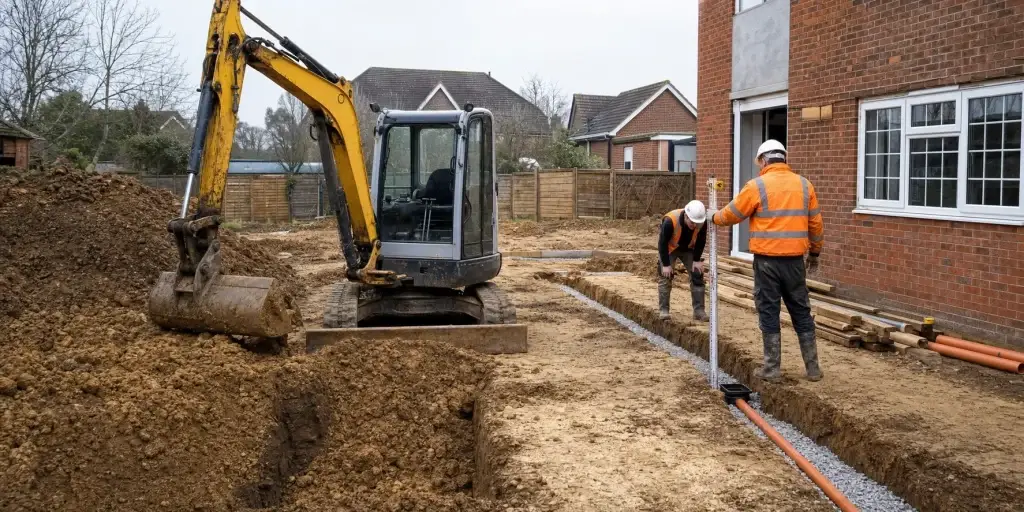
Strip foundations are the traditional method used in UK housebuilding for decades. They consist of a continuous strip of concrete, typically 600mm wide and at least 150mm deep, laid in a trench at the base of load-bearing walls. The trench is usually dug to a minimum depth of around 450mm to 1 metre, depending on ground conditions.
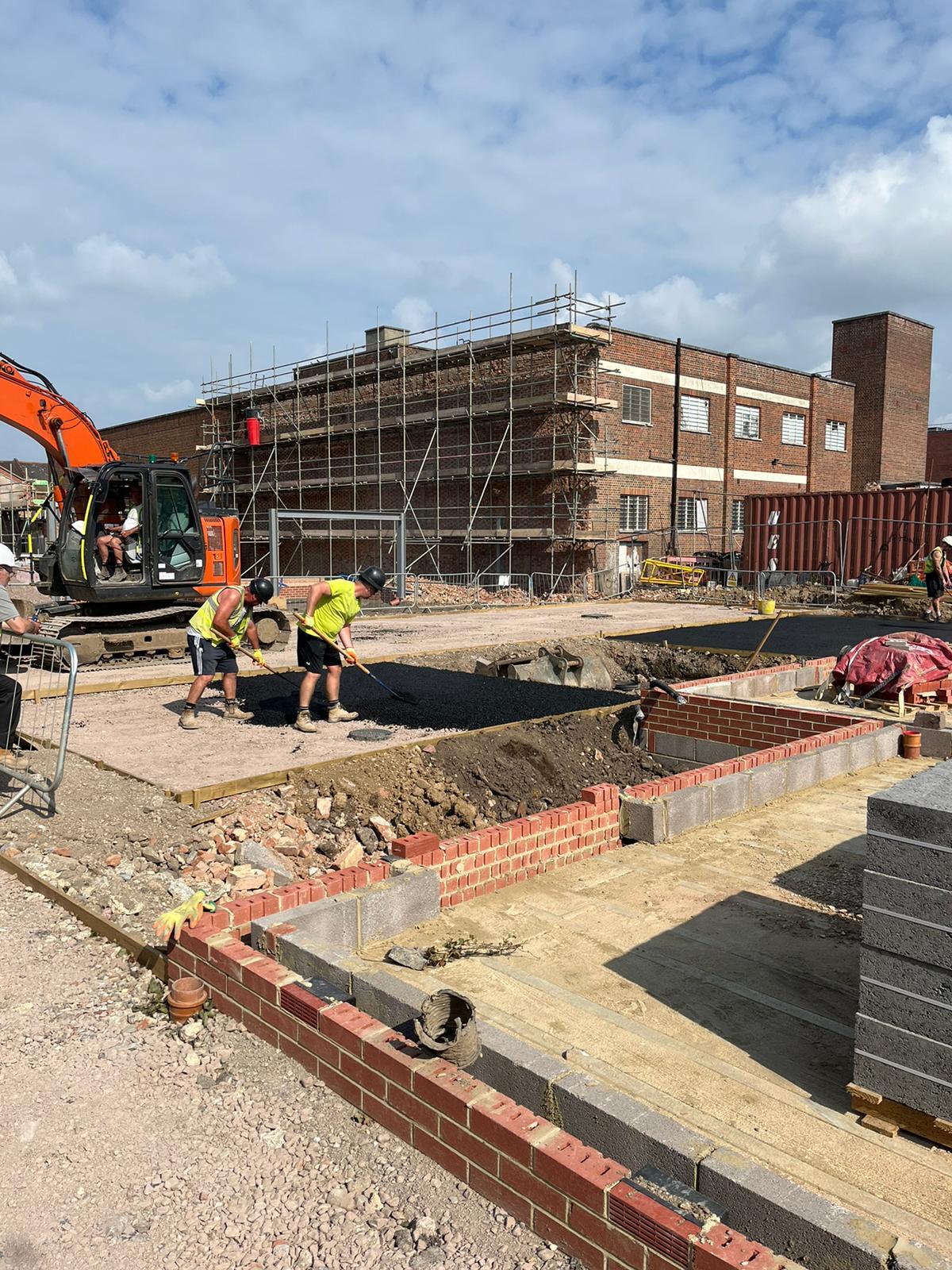
Once the concrete strip is poured and cured, brickwork or blockwork is built up from the strip to ground level (known as the substructure), and the cavity between the walls is backfilled. This creates a solid base upon which the rest of the building sits.
Key characteristics of strip foundations:
- Shallower trench depth (typically 450mm–1m)
- Narrower concrete pour with masonry substructure built on top
- More labour-intensive due to the bricklaying required below ground
- Works best in stable, well-drained ground
- Lower concrete costs but higher labour costs
What Are Trench Fill Foundations?
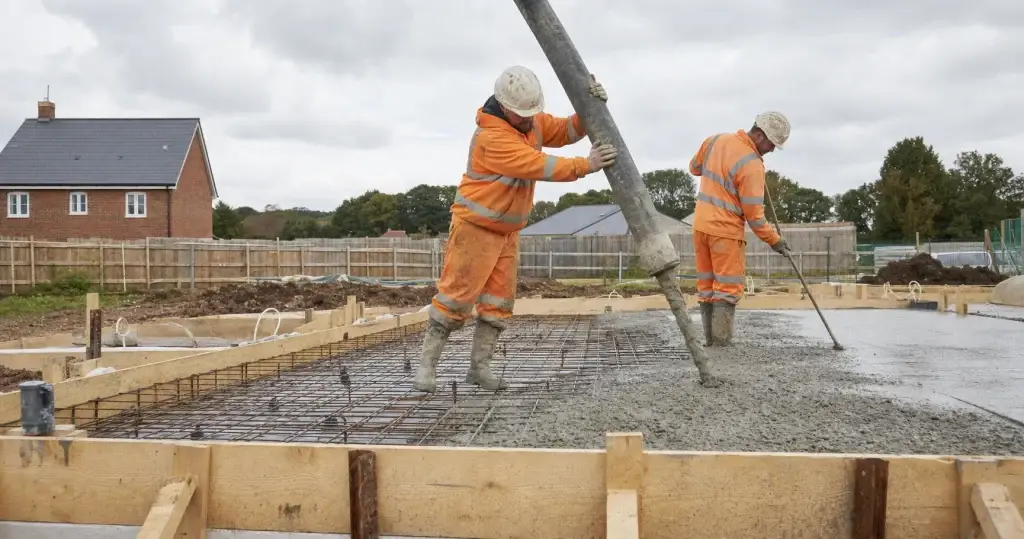
Trench fill is a more modern approach that has become increasingly common, particularly in areas with challenging ground conditions. Instead of a shallow strip of concrete with masonry built up from it, the trench is dug deeper and then filled with concrete almost to ground level.
A typical trench fill foundation involves trenches dug to 1 metre or deeper — sometimes 2 metres or more in areas with clay soil — and filled with mass concrete to within 150mm of the surface. The building’s walls then start almost immediately at ground level.
Key characteristics of trench fill foundations:
- Deeper trenches (1m–2.5m+ depending on conditions)
- Trench filled almost entirely with concrete
- Much faster to complete — no substructure bricklaying required
- Ideal for clay soils, trees nearby, and unstable ground
- Higher material costs but significantly lower labour costs
When Is Each Type Appropriate?
Choose strip foundations when:
- Ground conditions are stable (sand, gravel, chalk, or firm clay)
- The required foundation depth is relatively shallow (under 1m)
- You’re building lighter structures such as single-storey extensions or garden walls
- Budget is tight and labour costs are manageable
- There are no significant trees nearby that could cause ground movement
Choose trench fill when:
- Ground conditions are poor — particularly shrinkable clay
- Building Control requires depths greater than 1 metre
- There are trees near the building that could cause shrinkage or heave
- You want to minimise time on site (trench fill is much quicker to complete)
- The structure is heavier (two-storey builds, for example)
Cost Comparison
Cost is often the deciding factor, so let’s break it down realistically based on current 2026 pricing in Hampshire.
Strip foundations typically start from around £3,000 to £5,000 for a simple single-storey extension. The concrete volume is lower, but you’ll pay for additional bricklaying labour to build the substructure walls below ground level. Material costs are modest, but the process takes longer.
Trench fill foundations start from around £8,000 and can reach £15,000 or more for larger projects or deeper trenches. The bulk of the cost is concrete — filling a trench 1.5m deep with mass concrete uses a significant volume. However, the speed advantage means less time on site, fewer labour days, and a faster route to getting your building above ground.
For a detailed breakdown of groundworks costs in the region, see our comprehensive Hampshire Groundworks Cost Guide for 2026.
Hampshire-Specific Considerations: Clay Soil Matters
If you’re building in Hampshire, ground conditions are a major factor — and in many areas, that means clay. The geology across Southampton, Winchester, Eastleigh, Fareham, and Hedge End is dominated by London Clay and Reading Beds formations, both of which are classified as highly shrinkable.
What does this mean in practice? Clay soil expands when wet and shrinks when dry. This seasonal movement can exert enormous forces on foundations, potentially causing cracking and structural damage if the foundation isn’t deep enough to sit below the zone of moisture change.
Building Control in Hampshire will typically require foundation depths of 1 metre minimum on clay, and often much deeper — particularly where there are trees within influencing distance. It’s not uncommon for us to dig to 1.8m or even 2.5m in parts of Southampton and Winchester.
In these conditions, trench fill is almost always the preferred option. Building a masonry substructure 2 metres high below ground is impractical and expensive. Pouring concrete to fill that depth is far more efficient and provides a stronger, more stable foundation.
Building Regulations Requirements
Regardless of which foundation type you choose, all foundations in England must comply with Part A (Structure) of the Building Regulations. This means:
- A Building Control application must be submitted before work begins
- Trenches must be inspected by Building Control before any concrete is poured
- The depth, width, and reinforcement of the foundation must meet the structural engineer’s specification or Building Control’s requirements
- Concrete must meet minimum strength grades (typically C25 or higher)
- Adequate drainage must be in place to prevent water undermining the foundations
Your groundworker should coordinate with Building Control throughout the process. At Dorrington Groundworks, we manage this as standard — we call for inspections at the right stages and ensure everything is signed off correctly.
Making the Right Choice for Your Project
The truth is, the choice between strip and trench fill often makes itself once you understand the ground you’re building on. In areas of Hampshire with good, stable ground — parts of the South Downs chalk, for instance — strip foundations can work well and save money. But across much of the county, particularly in the clay belt running through Southampton, Eastleigh, and Winchester, trench fill is the practical and often the only viable option.
A proper site investigation or trial hole before you commit to a foundation design can save thousands of pounds in unexpected costs. We always recommend understanding what’s below the surface before finalising your budget.
Get Expert Advice on Your Foundations
If you’re planning a building project in Hampshire and need reliable, experienced groundworkers, we’d be happy to discuss your foundation options. With SMAS accreditation, CSCS-certified operatives, and nearly two decades of experience across Southampton, Winchester, Fareham, and the surrounding areas, we deliver foundations that are built right — on time and on budget.
Call us on 01489 539197 for a free, no-obligation quote, or get in touch via our contact page. We’ll visit your site, assess the ground conditions, and recommend the best foundation solution for your project.