Roads, footways, kerbs, drainage and highway connections are often treated as a later-stage detail on small and medium development sites. In practice, they can shape the programme from the start.
If a development needs new estate roads adopted by the local highway authority, or changes to an existing public road, the project may involve a Section 38 agreement, a Section 278 agreement, or both. These agreements sit alongside planning, technical approval, drainage design and site delivery. If they are not understood early, the result can be redesign, delayed starts, held-up occupations, outstanding defects or roads that remain private for longer than expected.
Dorrington Groundworks works across Hampshire, West Sussex and Wiltshire on residential and commercial groundworks packages, including roads and infrastructure, drainage installation, foundations, earthworks and external works. This guide explains what Section 38 and Section 278 agreements are, how they affect the groundworks phase, and what developers should prepare before work starts on site.
The Short Answer
A Section 38 agreement is normally used where a developer wants a new road, usually within a housing development, to be adopted as public highway once it has been built to the highway authority’s standards and maintained satisfactorily for the required period.
A Section 278 agreement is normally used where a developer needs to make permanent changes to an existing public highway. That might include a new site access, junction works, footway alterations, traffic calming, visibility improvements or changes connected to a planning approval.
Many development sites need both. A new estate road may be built under a Section 38 agreement, while the connection into the existing adopted road is delivered under a Section 278 agreement.
Why Road Adoption Matters on Development Sites
Road adoption is not just a legal or administrative issue. It affects how the road is designed, how drainage is detailed, what construction standards are used, when inspections happen and who is responsible for maintenance before adoption.
For developers, adoption matters because it can influence:
- planning conditions and reserved matters approvals;
- technical drawings and design-check submissions;
- highway drainage, gullies, carrier drains and outfalls;
- kerb lines, footways, tactile paving and street lighting;
- road construction depths and surfacing specification;
- phasing, temporary access and construction traffic;
- inspection hold points and defect correction;
- bonds, fees, maintenance periods and final adoption timing;
- resident or purchaser concerns where roads remain private or unadopted.
The Department for Transport’s road adoption guidance explains how new and existing roads can become maintainable at public expense under the Highways Act 1980. Hampshire County Council also publishes local guidance for Section 38 submissions, road adoption and developer applications. Those local requirements are what designers, consultants and contractors need to plan around on Hampshire schemes.
What Is a Section 38 Agreement?
A Section 38 agreement comes from the Highways Act 1980. It is a legal agreement between the developer and the highway authority for new roads to be built to an adoptable standard and then, if the conditions are met, adopted as public highway.
In Hampshire, the County Council states that Section 38 agreements are required where a new road is to be adopted by Hampshire County Council. The agreement sets out the standards the road must be built to. If the road is built to those standards and maintained satisfactorily through the maintenance period, the council can adopt it.
For a groundworks contractor, the practical point is simple: the road cannot be treated like a private driveway or informal access track. It must be constructed to the approved drawings and specification, with the right sub-base, drainage, kerbs, surfacing, levels and inspection process.
What Is a Section 278 Agreement?
A Section 278 agreement also comes from the Highways Act 1980, but it deals with works to the existing public highway rather than adoption of a new internal road.
Common Section 278 works include:
- forming a new access from an adopted road into a development site;
- widening or altering an existing junction;
- adding or changing footways, crossings or tactile paving;
- traffic calming connected to a development;
- visibility or alignment improvements;
- alterations to kerbs, drainage, gullies, signage or street lighting;
- minor highway works required by a planning condition.
West Sussex County Council describes Section 278 agreements as being for proposed modifications to the existing road network, while Section 38 covers adoption of new roads. That same distinction is useful for projects across the wider South Coast region, even though each authority has its own application process, technical notes and approval route.
When a Site May Need Both Agreements
It is common for a residential development to need both types of agreement. For example, a small housing scheme near Southampton, Winchester, Fareham or Eastleigh may include a new internal estate road and a new junction onto the public highway.
The internal estate road may fall under Section 38 if it is being offered for adoption. The new junction, footway alterations or visibility works on the existing public road may fall under Section 278. The two packages are connected, but they are not the same thing.
That distinction matters because each part can have different drawings, approvals, inspection requirements, bonds, fees and programme constraints. If the external highway works are delayed, the internal roads may be built but not properly connected. If the internal road is not built to adoptable standard, residents may move in before adoption is complete and defects can become harder to resolve later.
How Section 38 and Section 278 Affect Groundworks
The agreements themselves are handled by the developer, legal advisers, consultants and highway authority. The groundworks team still has a major role because the road has to be buildable, inspectable and constructed in line with the approved design.
Setting out and levels
Roads and footways need accurate setting out. Finished surface levels must coordinate with plots, driveways, drainage falls, service routes, visibility splays and existing highway levels. Small level errors early in the formation can create larger problems at kerb, drainage and surfacing stage.
Excavation and formation
Adoptable roads require the correct formation level and ground preparation. Soft spots, made ground, clay, groundwater or unsuitable material may need excavation, replacement, geotextile, capping or other engineered solutions. This is where experienced earthworks planning helps avoid repeated remedial work.
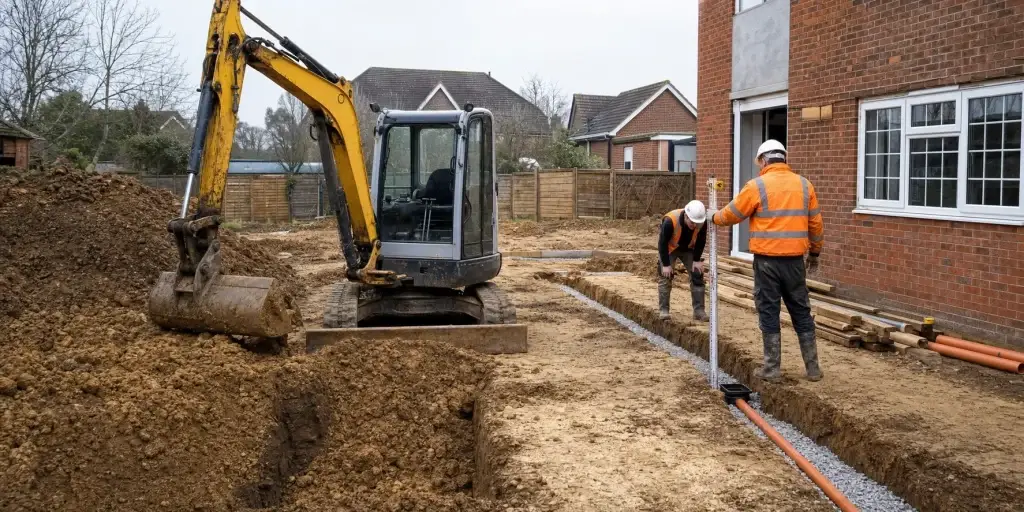
Drainage design and installation
Highway drainage is one of the most common causes of delay. Gullies, carrier pipes, manholes, attenuation, outfalls and connections must coordinate with the approved drainage strategy. If sewers or highway drains under the road are not adopted or signed off, road adoption can be delayed. Hampshire’s own public guidance notes that delays can be caused where sewers under the road have not been adopted by the sewerage authority.
Kerbs, edgings and footways
Kerb lines, crossing points, tactile paving, footway construction and private driveway tie-ins all need to follow the approved detail. These are visible items, so defects are easy to spot during inspections and can be disruptive to correct once surfacing or landscaping is complete.
Road construction and surfacing
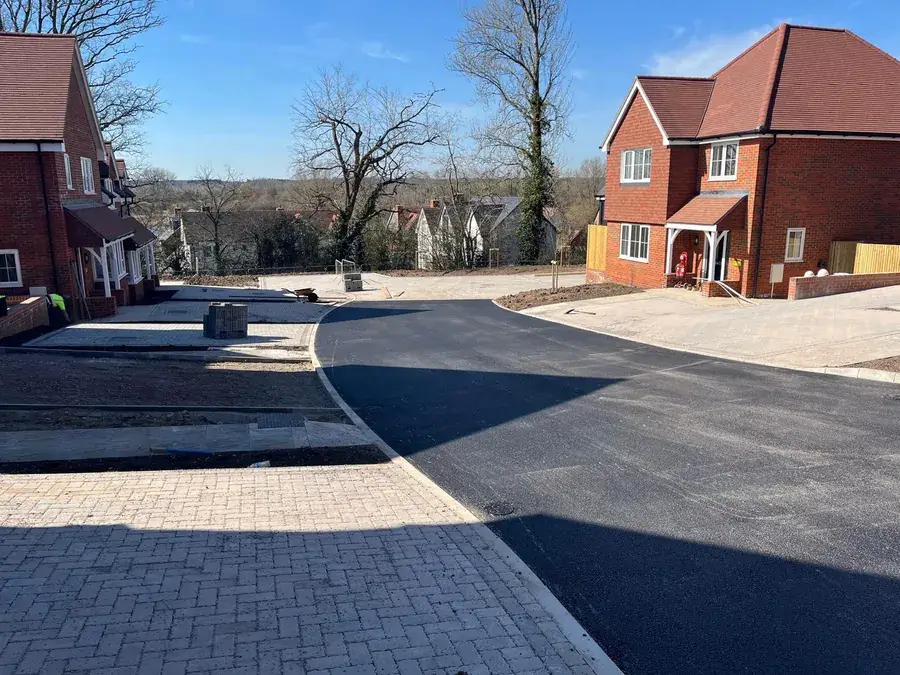
Construction thicknesses, materials and surfacing layers must match the specification. The road may need staged surfacing, with base layers installed early for construction access and final surfacing held until heavy construction traffic is reduced. That sequencing should be planned rather than improvised.
Concrete and retaining details
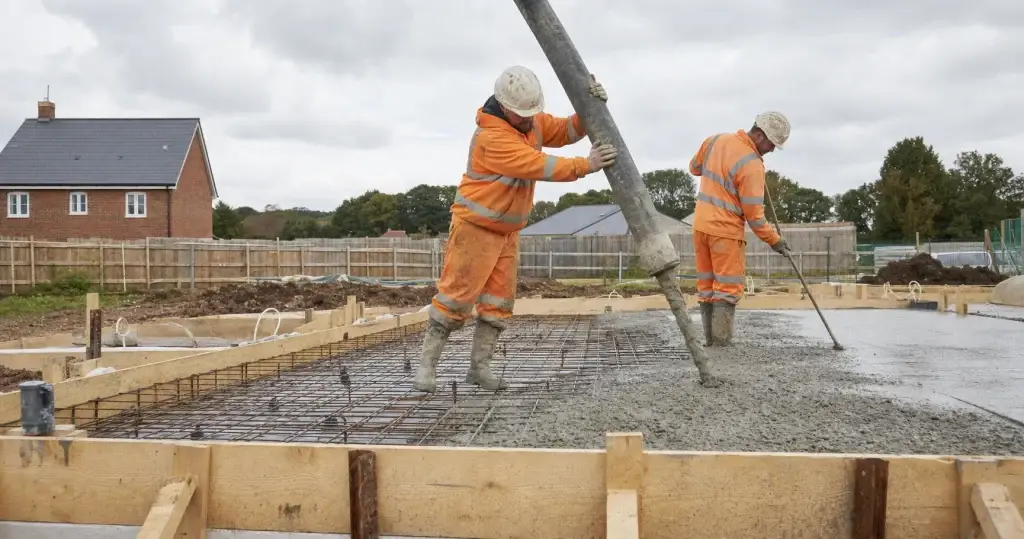
Some highway and infrastructure schemes include reinforced concrete works such as retaining walls, headwalls, bases, steps, ramps or structural slabs. These details need to coordinate with the road design, drainage and inspection regime.
Information to Have Ready Before Works Start
Before starting a road or highway infrastructure package, the useful information normally includes:
- approved planning drawings and relevant planning conditions;
- Section 38 and/or Section 278 technical drawings;
- highway authority comments, approvals and inspection requirements;
- road construction details, pavement design and material specification;
- drainage drawings, calculations, outfall details and adoption status;
- street lighting, service ducting and utility route information;
- visibility splay, access and traffic management requirements;
- temporary works and construction access strategy;
- phasing plan for plots, roads, footways and surfacing;
- inspection hold points and who must be notified before covering work;
- defect management process before the maintenance period starts.
Not every item will be relevant to every site, but missing information usually becomes expensive once plant, labour and materials are already on site.
Common Problems That Delay Adoption
Starting before the technical package is complete
Early starts can be useful, but only where the design risk is understood. If drawings are still changing, the groundworks contractor may install kerbs, drainage or road build-up that later has to be altered.
Treating drainage as separate from the road
Road adoption and drainage adoption often interact. If the drainage under the road is not acceptable, the road can be delayed even when the surfacing looks complete. This is why drainage installation should be planned as part of the infrastructure package, not as a separate afterthought.
Leaving defects until the end
Ponding, cracked kerbs, poor reinstatement, damaged gullies, incorrect ironwork levels or incomplete footways can hold up adoption. Defects are easier to correct when they are logged and dealt with during the build rather than after residents have moved in.
Using the finished road as a construction haul road
Heavy construction traffic can damage finished surfacing, kerbs, edgings and ironwork. On many sites, it is better to plan temporary construction access or staged surfacing so the final wearing course is protected.
Not coordinating with utilities
Utility trenches, service crossings and duct routes can disrupt road formation and surfacing if they are not planned. Repeated trenching through newly constructed roads creates avoidable quality and programme risk.
Assuming every road will be adopted automatically
Not all roads are adopted. Hampshire County Council’s public guidance explains that roads may remain private where they are not offered for adoption or do not meet adoption standards. Developers should be clear from the start whether roads are intended to be adopted, private, or subject to another arrangement.
A Practical Sequence for Developers
For a development with new roads or highway changes, a sensible sequence is:
- Confirm whether the roads are intended to be adopted, remain private, or include both adopted and private areas.
- Identify whether the site needs Section 38, Section 278, minor works, or a combined road agreement route.
- Engage the highways consultant, drainage designer, structural engineer and groundworks contractor early enough to test buildability.
- Prepare technical drawings that coordinate road levels, plot levels, drainage, utilities, kerbs, footways and access.
- Submit the required package through the relevant highway authority process.
- Agree inspection hold points before work starts.
- Plan temporary access, construction traffic and staged surfacing.
- Record inspections, material certificates, test results and as-built information as work progresses.
- Correct defects before they become adoption blockers.
- Protect final surfaces and complete maintenance-period obligations.
This process reduces the risk of the road becoming the part of the scheme that holds up completion or frustrates future residents.
Where Dorrington Groundworks Fits In
Dorrington Groundworks is not the highway authority and does not replace the need for legal, engineering or planning advice. Our role is practical delivery: building the groundworks, drainage, road construction and external works correctly on site.
That can include:
- site clearance and enabling works before road construction;
- bulk excavation, reduced dig and formation preparation;
- drainage installation, gullies, manholes and service trenches;
- kerbing, edgings, footways and access works;
- road sub-base, construction layers and surfacing preparation;
- concrete bases, retaining details and structural external works;
- coordination with inspections and practical defect correction.
Because we regularly work on residential development sites, we understand the importance of sequencing infrastructure around plots, utilities, drainage, follow-on trades and purchaser deadlines.
Useful Official Guidance
For current requirements, always check the relevant highway authority and project-specific approvals. These sources are useful starting points:
- Department for Transport guidance on adoption of roads by highway authorities
- Hampshire County Council Section 38 agreement guidance
- Hampshire County Council guidance on new housing and highway adoption
- West Sussex County Council road agreements guidance
- Highways Act 1980
Planning Roads or Highway Works in Hampshire?
If your development needs new estate roads, access works, drainage, kerbs, footways or infrastructure groundworks, Dorrington Groundworks can help with the practical construction stage.
We work across Southampton, Winchester, Fareham, Eastleigh, Portsmouth, Chichester and surrounding areas across Hampshire, West Sussex and Wiltshire.
Call 01489 539197 or contact Dorrington Groundworks to discuss your roads and infrastructure package.
Frequently Asked Questions
What is the difference between a Section 38 and Section 278 agreement?
A Section 38 agreement is usually for new roads that a developer wants adopted as public highway. A Section 278 agreement is usually for changes to an existing public highway, such as a new access, junction alteration or highway improvement linked to a development.
Can a development need both Section 38 and Section 278?
Yes. A housing development may need Section 38 for the new internal estate road and Section 278 for the junction or access works connecting it to the existing adopted highway.
Who is responsible for the road before adoption?
Before adoption, responsibility usually sits with the developer or road owner, depending on the agreement and site arrangements. Hampshire County Council notes that roads awaiting adoption remain the developer’s responsibility.
Why do road adoptions get delayed?
Common causes include incomplete works, defects, drainage or sewer adoption issues, unfinished street lighting, incorrect construction details, outstanding maintenance-period requirements or legal and bond issues.
Does Dorrington Groundworks arrange Section 38 or Section 278 agreements?
The legal agreement and highway authority submission are normally handled by the developer, legal team and highways consultant. Dorrington Groundworks can support the practical construction side, including roads, drainage, kerbs, surfacing preparation and infrastructure groundworks.
Can Dorrington Groundworks work on adopted highway works?
Where the correct approvals, traffic management, drawings and inspection arrangements are in place, we can support highway-related groundworks and infrastructure construction as part of an agreed development package.